مجله آب و فاضلاب

مجله آب و فاضلاب

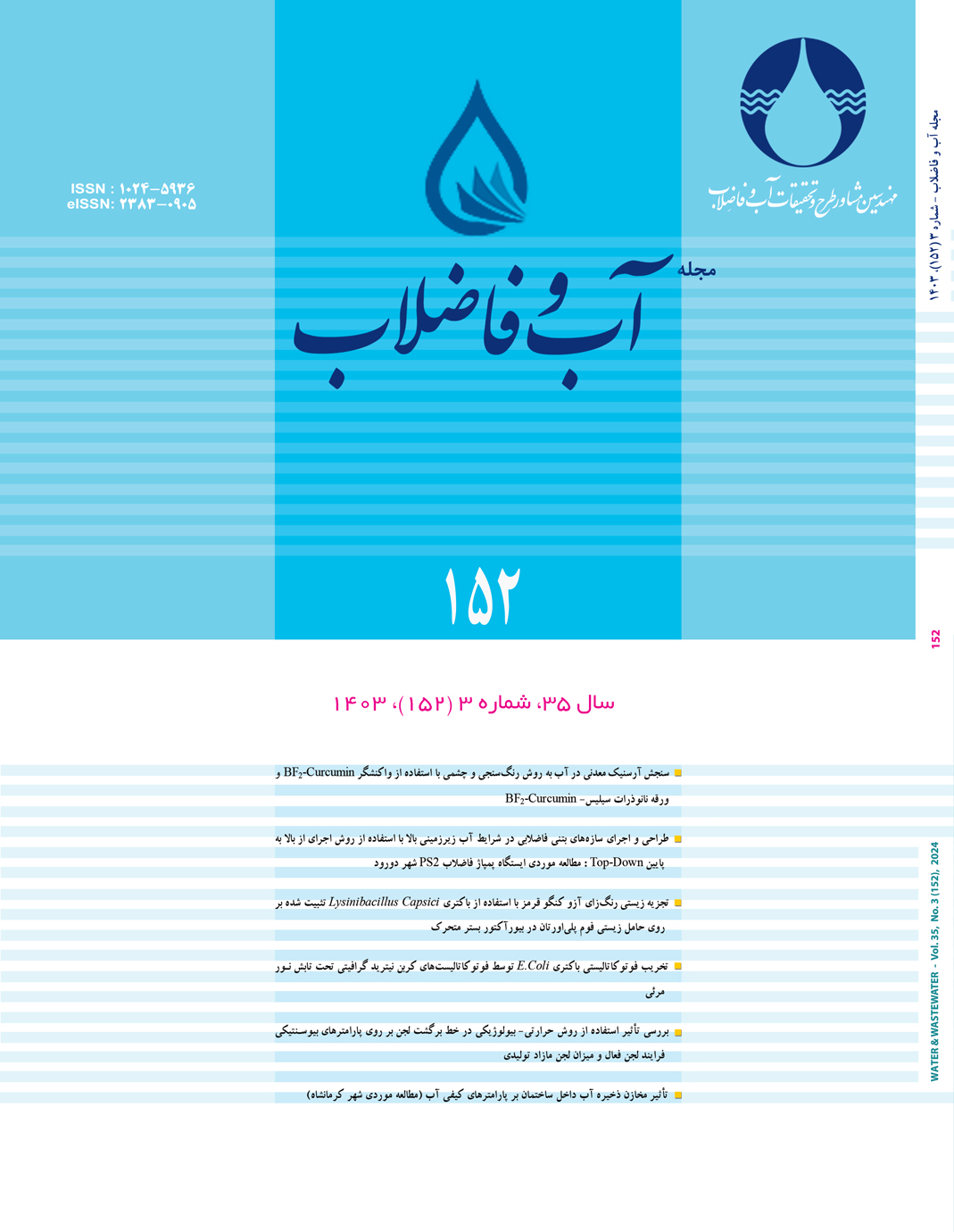
تجزیه زیستی رنگ‌زای آزو کنگو قرمز با استفاده از باکتری Lysinibacillus Capsici تثبیت شده بر روی حامل زیستی فوم پلی‌اورتان در بیورآکتور بستر متحرک

نوع مقاله : مقاله پژوهشی

نویسندگان
1 کارشناسی ارشد مهندسی عمران- محیط‌زیست، دانشکده مهندسی عمران، دانشگاه علم و صنعت ایران، تهران، ایران
2 استادیار، گروه مهندسی آب و محیط‌زیست، دانشکده مهندسی عمران، دانشگاه علم و صنعت ایران، تهران، ایران
3 کارشناسی ارشد میکروبیولوژی، گروه زیست‌‌شناسی سلولی مولکولی و میکروبیولوژی، دانشگاه اصفهان، اصفهان، ایران
چکیده
نگرانی از پایداری زیستی، سمّیت و پتانسیل اختلال در اکوسیستم‌های آبی و سلامت انسان، رنگ‌زا‌های آزو را به یک مسئله جدی زیست‌محیطی در فاضلاب‌های صنعتی تبدیل کرده است. در این راستا، دسته باکتری‌های ایزوله شده از فاضلاب آلوده به رنگ‌زا در یک بیورآکتور بستر متحرک با حامل‌های زیستی فوم‌پلی‌اورتان برای تجزیه زیستی رنگ‌زا آزو کنگو قرمز استفاده شد. بر اساس پایگاه داده (eztaxon) EzBioCloud، باکتری غالب که از طریق استخراج DNA، PCR و بارگذاری توالی(16S-rRNA) شناسایی شد که بیشترین تشابه را با باکتری Lysinibacillus Capsici PB300(T) داشت. کارایی حذف رنگ‌زا و COD در MBBR در ارتباط با پارامترهای زمان فرایند، نسبت پر شدگی و غلظت رنگ‌زا بررسی شد. حذف رنگ‌زا در این سیستم بهینه‌سازی شد که در آن، pH برابر 2/0 ± 7، دما برابر 0/1 ± 35 درجه سلسیوس و COD برابر 980 میلی‌گرم در لیتر ثابت نگه داشته شدند. بیشترین کارایی حذف رنگ‌زا و COD به‌ترتیب 92 و 1/85 درصد پس از 72 ساعت در غلظت رنگ‌زا 50 میلی‌گرم در لیتر و نسبت پر شدگی 40 درصد به‌دست آمد. مدل‌سازی سینتیک برای مطالعه تجزیه زیستی استفاده شد. مقدار R2 مدل مرتبه اول برابر 9457/0 و برای مدل مرتبه دوم برابر 9791/0 بود. مدل سینتیک مرتبه دوم (معادله گراو) پیش‌بینی دقیق‌تری از تجزیه رنگ‌زا را در سیستم MBBR توصیف کرد. این پژوهش تجزیه موفقیت‌آمیز رنگ‌زای آزو کنگو قرمز را با استفاده از باکتری‌های تثبیت ‌شده بر روی حامل‌های زیستی PUF در بیورآکتور MBBR تأیید می‌کند.
کلیدواژه‌ها

عنوان مقاله English

Biodegradation of Congo Red Azo Dye Using Lysinibacillus Capsici Immobilized on Polyurethane foam Biocarrier in Moving Bed Bioreactor

نویسندگان English

Soroush Dayani Najafabadi 1
Maryam Hasani Zonoozi 2
Roya Aliaskarian 3
1 Master of Environmental Engineering, Dept. of Civil Engineering, Iran University of Science and Technology (IUST), Tehran, Iran
2 Assist. Prof., Water and Environmental Engineering Group, Dept. of Civil Engineering, Iran University of Science and Technology (IUST), Tehran, Iran
3 Master of Microbiology, Dept. of Molecular Cell Biology and Microbiology, Isfahan University, Isfahan, Iran
چکیده English

Biosustainability, toxicity, and the potential for disruption of aquatic ecosystems and human health have made azo dyes into a serious environmental issue in industrial wastewater. In this context, a group of bacteria isolated from dye-contaminated wastewater was used in a moving bed bioreactor with polyurethane foam biocarriers for the biodegradation of Congo red azo dye. According to the EzBioCloud database (eztaxon), the dominant bacterium identified through DNA extraction, PCR, and 16S-rRNA sequencing showed the highest similarity to Lysinibacillus Capsici PB300(T). The efficiency of dye and chemical oxygen demand (COD) removal in the MBBR was examined in relation to process time, filling ratio, and dye concentration. Dye removal in this system was optimized, maintaining the pH at 7 ± 0.2, the temperature at 35 ± 1.0 °C, and COD at 980 mg/L. The highest removal efficiencies for dye and COD were 92% and 85.1%, respectively, after 72 hours at a dye concentration of 50 mg/L and a filling ratio of 40%. Kinetic modeling was employed to study biodegradation. The R² value for the first-order model was 0.9457, while for the second-order model it was 0.9791. The second-order kinetic model (Grau's equation) provided a more accurate prediction of dye degradation in the MBBR system. This study confirms the successful degradation of Congo red azo dye using immobilized bacteria on Polyurethane foam (PUF) biocarriers in the MBBR bioreactor.

کلیدواژه‌ها English

Congo Red Azo Dye
Polyurethane Foam
Moving Bed Bioreactor
Lysinibacillus Capsici PB300(T)
Biodegradation